
Navigating Christmas with a Neurodivergent Child: Support, Structure and Self-Care
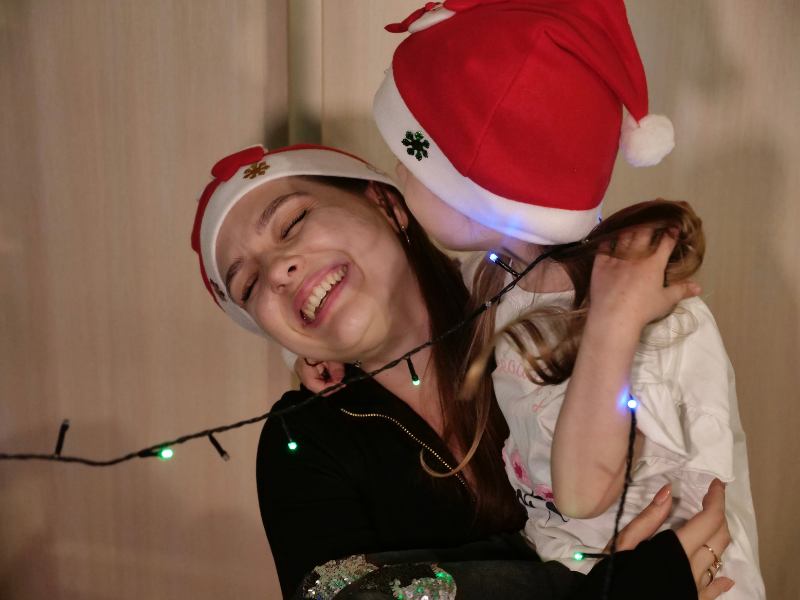
Parent/Child hugging at Christmas
When it comes to the holiday season, Christmas is often advertised as fun, magical, and all about connection.
However, any parent, carer or guardian knows the challenges that come with any holiday – especially when raising a neurodivergent child.
Why Christmas Can Feel Overwhelming for Neurodivergent Children
Often their behaviour may appear as laziness, aggression or thoughtless, which is why Christmas may feel exhausting rather than magical.
Understanding the Emotional Impact of the Holiday Season
For a neurodivergent child, there may be a mix of emotions during the holiday season. Understanding these emotions can help parents put supportive structures in place. For example:
- Excitement for what’s to come may lead to sleepless nights having a knock-on effect with their routine
- Sensory overload from the chaos in their environment may lead to emotional dysregulation
- Disrupted routines and social pressures may lead to meltdowns
What Looks Like ‘Challenging Behaviour” Is Often Overwhelm
What we may see as laziness, aggression or mindless behaviour is actually a neurodivergent child trying to manage the chaos inside and around them. A meltdown is not necessarily about not getting the toy they wanted – even if it appears that way – but instead, the overwhelm of a chaotic morning, the dopamine drop after heightened excitement or irritability from a lack of sleep.
As parents, we all know that without sufficient sleep, no matter how exciting something is, eventually the tiredness catches up with you – so you can imagine for a child going full steam, the come down can sometimes seem more unexpected or out of control as usual.
Managing Routine Changes Without Aiming for Perfection
A good way to support your neurodivergent child through this period is to manage routine changes. This could be as simple as creating a visual schedule so children can see what they’ll be doing each day throughout the holidays. This helps to prepare their mind for what’s to come.
You can also partially stick to their normal routine, for example, morning and evening routines can stay the same. The key with managing routine changes is letting go of perfection. It will be trial and error but allow your child to dictate what works for them – it allows for a much smoother transition.
Navigating Sensory Overload During Christmas
We know the holidays are filled with Christmas cheer. From attending carol services, visiting family, shopping, and busy households – which is why navigating sensory overload becomes essential.
Think about taking sensory breaks, ask your child how long they think they can manage in a loud environment. Noise-cancelling headphones are also useful. Creating quiet spaces is another adjustment. Before going to visit family/friends, ask if they have a quiet space where your child can feel comfortable to take some time, should they need it.
Giving Yourself Permission to Say No
You may even choose to skip events. I advise to plan out all the Christmas events you intend to go to, and intentionally select those you are willing to miss, without guilt. Remember, when your child is stressed, you too become stressed.
Alongside supporting your child, it is just as important to consider yourself. As parents, we fall into the habit of thinking and doing for everyone else first before ourselves. We put pressure on ourselves for things to look perfect, for the kids to be well dressed, the food to be delicious and our homes to be not only clean but have the warmth of Christmas cheer – whilst we’re well put together, dressed, hair and face done. Even writing this highlights just how unrealistic those expectations are.
Trying to do it all only ends with us in tears, losing our shit with someone or hiding in the back hoping no one will notice.
Small, Realistic Ways to Reclaim Time for Yourself
This Christmas, consider choosing just one of the following to support yourself:
- Take micro-moments of rest. This could be every couple of hours, retreating to your room (or some personal space) for 20 minutes. Trust me, just little bursts of rest throughout the day will help you to breathe, reset and get back to things in a calmer way.
- Tag-Team with another adult. Take it in turns who is managing/entertaining the kids. Why should it all be on one person? Better still if there are multiple adults, everyone works in 30-minute increments and swap.
- Lower the bar. For those doing it alone, take the pressure off trying to do everything. Do what you can, and leave it there. If that means watching a movie instead of going to Winter Wonderland or the local Pantomime, you’ve shown up regardless.
A Gentle Reminder This Christmas
The holidays are about joy, magic and shared moments – but they are also time for rest. You deserve the magic of peace, the magic of calm and the freedom to care for yourself without guilt. Rest is not selfish, it’s necessary. Your child doesn’t need a perfect parent - just a regulated one. So, if that means missing a family event or creating quieter spaces, know that what you’re doing supports both your child and yourself.
Peace & Blessings,